




Every year, the Institute of Financial Operations and Leadership (IFOL) publishes its Accounts Payable Automation Trends report, providing a snapshot of how finance teams are responding to increasingly complex business demands.
The latest edition, based on research conducted between April and June 2026 among professionals working in accounts payable (AP) or purchase-to-payment (P2P) functions from a range of industries, highlights an interesting contradiction: organisations perceive the value of digital transformation and AI adoption, yet many finance departments are still constrained by manual processes, fragmented systems and workflow inefficiencies.
The priority in 2026 may no longer be understanding the value of automation; instead, it is closing the gap between ambition and execution.
The appetite is there
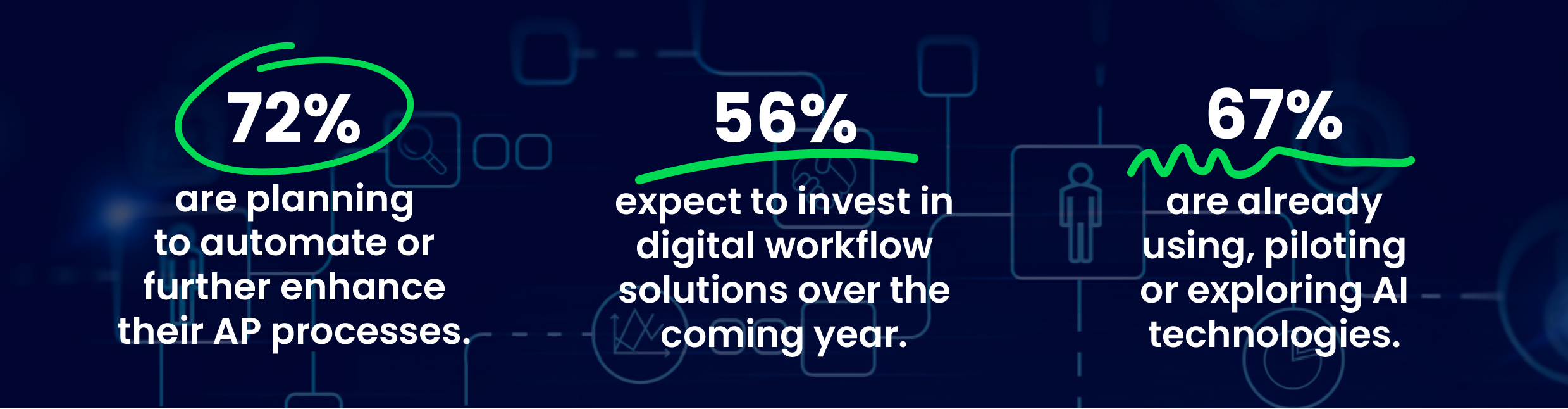
The IFOL report shows that finance leaders are not short of intention when it comes to digital transformation. 72% of respondents are planning to automate or further enhance their AP processes, 39% of them within the next 12 months. In addition, 56% expect to invest in digital workflow solutions over the coming year. 67% are already using, piloting or exploring AI technologies, while only 14% have no planned investment in either area.
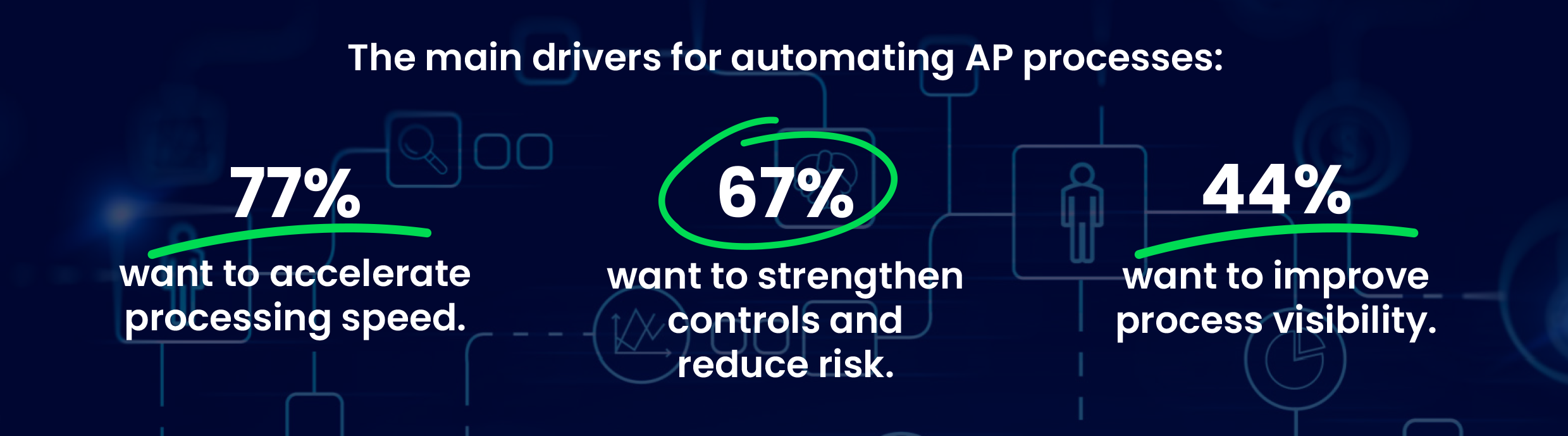
When asked about the main reasons for automating AP processes, accelerating processing speed (77%) tops the list, followed by strengthening controls and reducing risk (67%) and improving process visibility (44%). Other drivers include reducing costs, managing growing invoice complexity and supporting sustainability. Reflecting these priorities, 70% of respondents believe automation and AI would allow finance professionals to focus on higher-value work.
These findings suggest that organisations now view AP automation as a strategic necessity rather than simply a cost-saving initiative. The question is no longer why they should adopt and implement it, but how they can do it successfully.
The reality looks a bit different
While enthusiasm for investment in automation is still high, the day-to-day experience across many AP departments tells a different story. Despite increased interest, only 7% of organisations describe their AP function as fully automated; by contrast, 23% continue to operate in a completely manual environment.
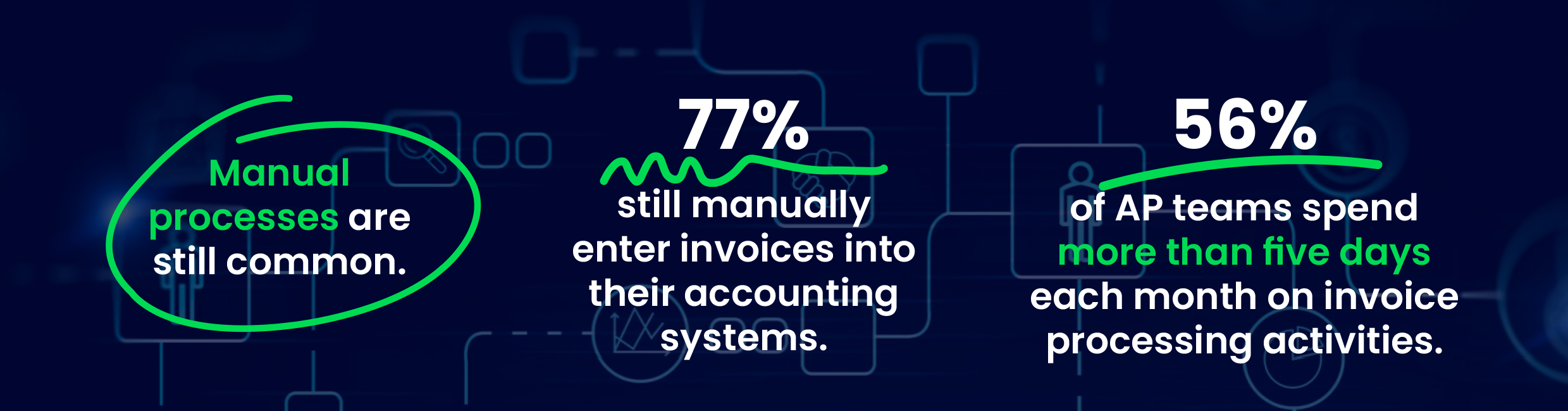
Manual processes are still common. 77% of respondents still manually enter invoices into their accounting systems, an increase from 66% in the previous year’s edition. At the same time, 56% of AP teams spend more than five days each month on invoice processing activities.
The research also indicates that many businesses have yet to establish consistent P2P processes. One quarter of respondents reported that none of their invoices go through a purchase order process, limiting visibility and control before expenditure is committed.
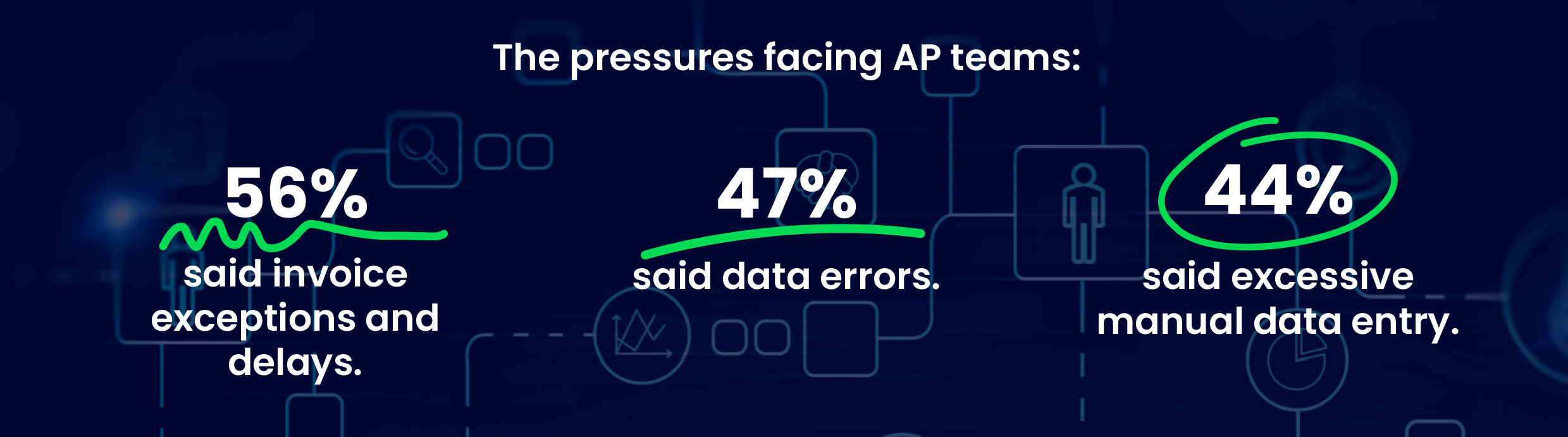
These operational realities are reflected in the pressures facing AP teams. Invoice exceptions and delays (56%), data errors (47%) and excessive manual data entry (44%) are consistently identified as major sources of inefficiency.
Taken together, these results show that many organisations are still struggling to translate automation plans into effective change and scale those programmes successfully, particularly as invoice volumes and business complexity continue to grow.
Beyond efficiency: Creating strategic capacity
Although speed is still a key priority, the findings suggest companies are looking for broader outcomes from AP automation. Strengthening controls and reducing risk are almost as important as accelerating invoice processing. Only 16% of research participants declare having full visibility of liabilities and cash commitments, highlighting a significant opportunity for better financial oversight.
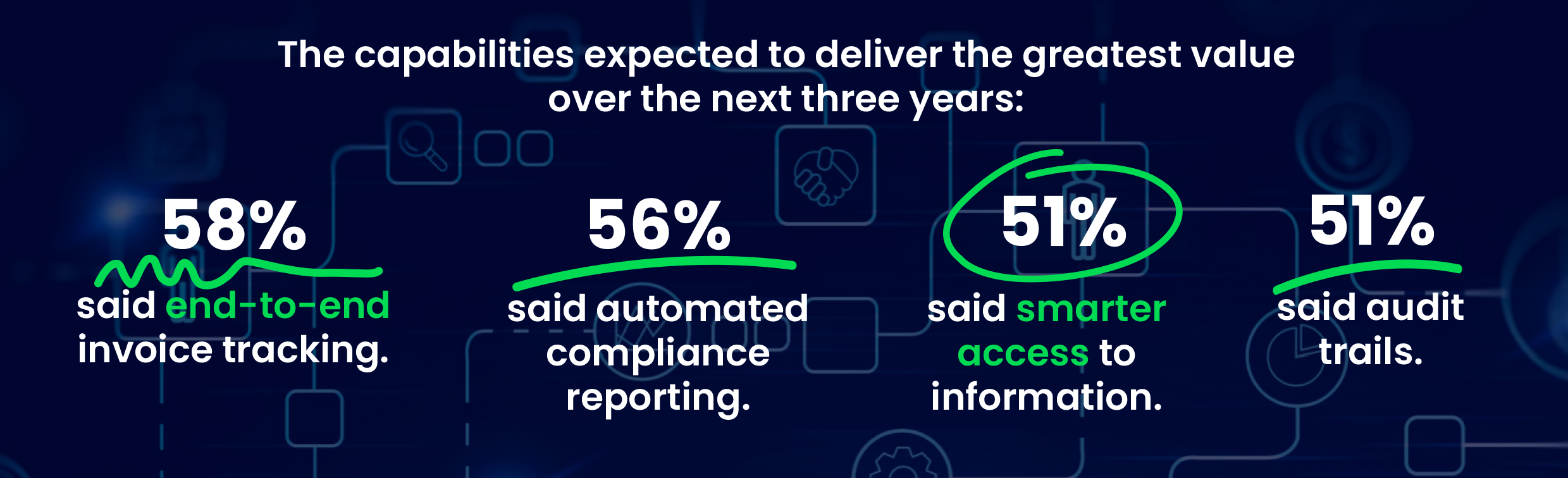
This is reflected in the capabilities expected to deliver the greatest value over the next three years, including end-to-end invoice tracking (58%), automated compliance reporting (56%), smarter access to information (51%) and audit trails (51%).
Ultimately, the goal is not simply to process invoices faster. By streamlining routine tasks, modern AP solutions create capacity for finance professionals to focus on analysis, planning, risk management and informed decision-making.
Organisations looking to accelerate their finance transformation should focus on:
- Automating high-volume, repetitive tasks and reducing manual data entry
- Improving visibility of commitments and liabilities
- Standardising approval processes
- Building stronger audit trails
- Creating more time for analysis and higher-value activities
The opportunity ahead
The latest IFOL research reveals a gap between ambition and reality. Investment in new technologies continues to grow, but many organisations are still progressing towards more mature and effective AP operations.
The opportunity is significant. Organisations that combine process improvement, automation, AI adoption and the right expertise will be best placed to transform AP from an operational function into a strategic contributor to the business.
Supporting your finance automation journey
At Agilico, we help organisations improve efficiency, visibility and control across their purchasing and accounts payable processes. If you’re exploring ways to streamline your finance operations, we’d love to show you how POP and Verify can help your business achieve its digital transformation goals.